Best CPAP-Friendly Pillows: 4 Practical Picks (2026)
Affiliate disclosure: As an Amazon Associate I earn from qualifying purchases. MedHelperPro may earn a commission from eligible purchases made through links in this guide, at no extra cost to you. Affiliate availability does not affect our selections. Read the full disclosure.
Research note: Product selections are based on published specifications, policies, clinical evidence, and independent comparisons. This guide does not claim hands-on pillow or CPAP testing.
Verified exact listing: The marketplace listing below was checked as the Lunderg CPAP Pillow for Side & Back Sleepers, Memory Foam, Full Size (Home), ASIN B084R77J83. Confirm the selected full-size variant, title, seller, stock, and return terms before ordering.
Choose mask clearance and usable loft before a brand name.
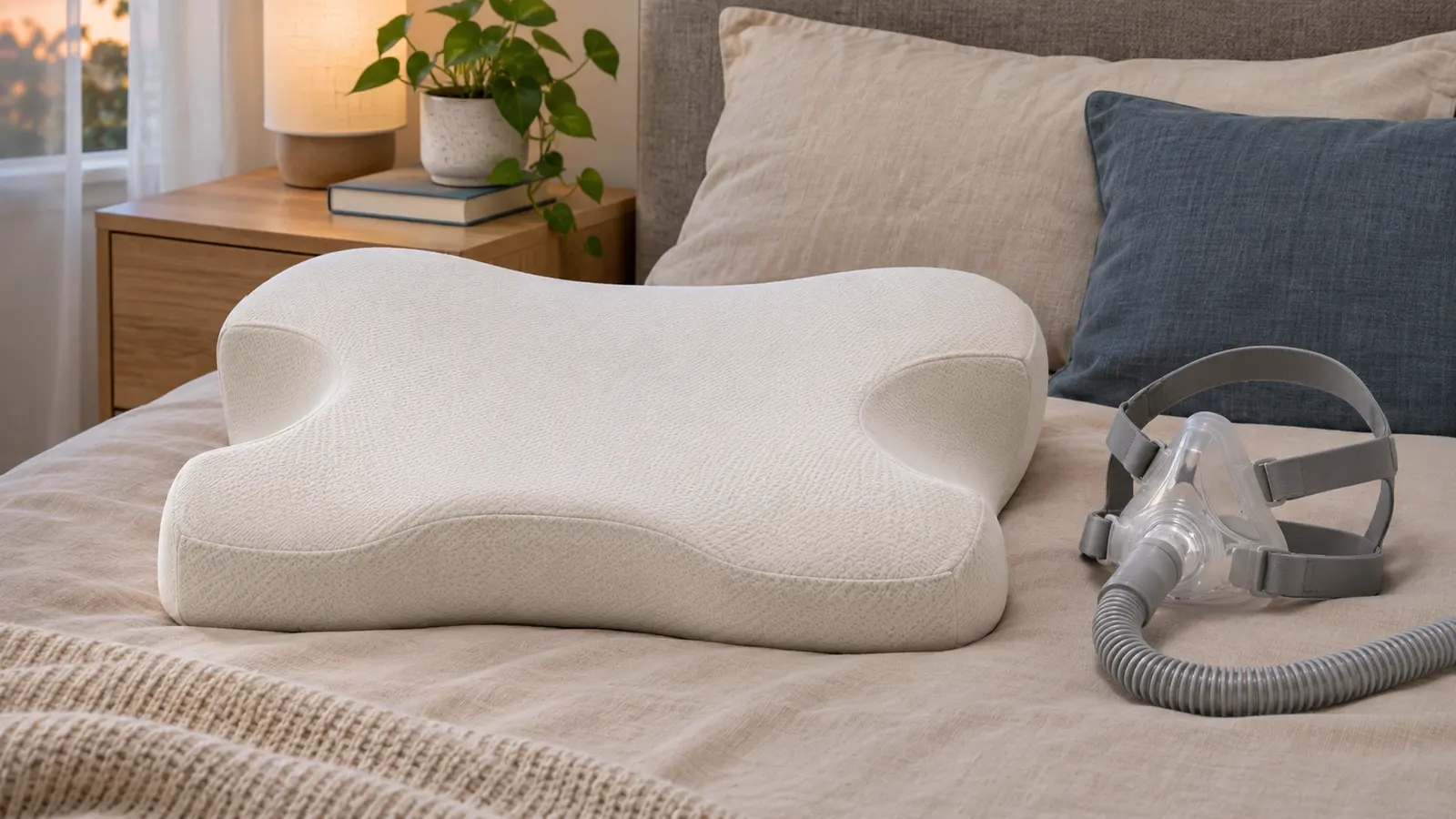
Lunderg's Memory Foam CPAP Pillow is our top researched pick for its two neck profiles, symmetrical mask cutouts, removable 1.1-inch layer, and two cases. Contour CPAPMax 2.0 offers the widest stated height range and a hose tether. Lunderg Parkin suits soft-pillow buyers, while Core CPAP Pillow is the simpler fiber-fill choice.
BEFORE CLAIMS
A CPAP-friendly pillow is a comfort accessory, not sleep apnea treatment and not a fix for every mask leak. A small 22-person study found no significant average difference in air leak, residual AHI, pressure, or CPAP use among a standard pillow and two specialty shapes. Start with the place where your pillow touches the mask or tugs the hose. If there is no contact problem, keep the pillow that already fits your body. For a broader look at loft and compression, see our pillow fit guide.
Quick decision summary
- Best overall for adjustable foam support: Lunderg Memory Foam CPAP Pillow, with 4.4-inch and 5.5-inch heights, two neck profiles, side cutouts, and two included cases.
- Best for the widest loft range: Contour CPAPMax 2.0, with removable layers spanning 2.25 to 5.25 inches, two sleep surfaces, side cutouts, and a hose tether.
- Best soft adjustable option: Lunderg Parkin, with removable synthetic down alternative fill, a thin memory foam base, a cotton case, and a 17.4 by 26.4-inch footprint.
- Best simple fiber-fill design: Core CPAP Pillow, a 21 by 15 by 4-inch contoured pillow with a fitted case and a 90-day direct-purchase satisfaction guarantee.
How we chose these CPAP-friendly pillows
We checked current product pages, dimensions, materials, care, direct prices, return terms, and warranties on November 3, 2026. We gave more weight to usable mask space, adjustable loft, clear ownership terms, and differences that let one pillow serve a distinct buyer. Amazon availability did not determine inclusion or position.
The clinical evidence is limited. Participants used each pillow for five nights. The gel option received higher satisfaction scores, but 21 of 22 people used nasal masks. One full-face mask user had lower leak with the specialty pillows, far too small a subgroup for a product promise. We treat cutouts as a compatibility feature, not proof of better therapy.
The American Thoracic Society lists a cutout pillow as one possible response to nighttime mask leak, alongside mask readjustment, hose management, and another mask. A pillow can create space around a correctly fitted interface. It cannot correct the wrong mask size, a worn cushion, mouth leak, or a damaged hose.
CPAP-friendly pillow comparison
| Pillow | Clearance and loft | Fill and size | Checked direct price | Returns and warranty | Skip it if |
|---|---|---|---|---|---|
| Lunderg Memory Foam | Side cutouts; two neck profiles; 4.4 or 5.5 inches | Memory foam; 14.5 by 21.6 inches; two cases | $79.00 | 30 days, unused only, buyer pays return shipping; 1-year registered warranty | You dislike firm foam or need to sleep-test before deciding |
| Contour CPAPMax 2.0 | Side cutouts; hose tether; 2.25 to 5.25 inches | Foam core with mesh side or fiber-fill side; 20 by 13 inches | $69.99 | 45-day direct comfort guarantee; 1-year defect warranty | You want a standard-size pillow or no specialized case |
| Lunderg Parkin | Side cutouts; add or remove loose fill | Synthetic down alternative with thin foam base; 17.4 by 26.4 inches | $69.95 | 30 days, unused only, buyer pays return shipping; 1-year registered warranty | You want one-piece foam or a trial that allows use |
| Core CPAP Pillow | Defined edges for mask and hose; fixed 4-inch loft | Polyester fiber; 21 by 15 inches; fitted case | $74.46 | 90-day direct satisfaction guarantee; current FAQ states 3-year defect warranty | You need adjustable loft or broad, deep side cutouts |
Prices and policies are dated snapshots. A generous return window may still exclude a used pillow, so read the condition requirement before opening sealed bedding.
Which CPAP-friendly pillow fits each buyer?
1. Lunderg Memory Foam CPAP Pillow: best overall
Lunderg's full-size memory foam pillow gives a side sleeper three useful adjustments before asking them to replace the mask. The pillow has a smaller and larger neck profile, cutouts on both sides, and a removable 1.1-inch base. The listed height is 5.5 inches with the layer and 4.4 inches without it. That is a meaningful choice, though both settings remain fairly tall for some back and stomach sleepers.
The direct price was $79. The 14.5 by 21.6-inch pillow includes comfort and cooling-feel cases. The foam is not washable, while the cases are machine washable. Lunderg calls the foam firm. Cutouts will not make slow-response memory foam suit someone who already dislikes it.
Ownership terms are the main catch. Lunderg's written policy provides 30 days from delivery, but the item must be unused and in original packaging, and the buyer pays return shipping. Registration provides one year of defect coverage. That is not a sleep trial. The verified Amazon listing is the Full Size (Home) memory foam variant, ASIN B084R77J83.
Best for: a side or combination sleeper who already likes firm memory foam and needs bilateral space for a full-face, nasal, or nasal-pillow interface. Skip it if: you need a low-loft setting below 4 inches, want a standard queen footprint, or will only know the fit after sleeping on it.
2. Contour CPAPMax 2.0: best loft and hose adjustment
Contour CPAPMax 2.0 has the broadest published height range in this shortlist. Removable layers create settings from 2.25 to 5.25 inches. Its cutouts leave the mask near the edge, and an integrated tether gives a conventional front-hose setup a fixed routing point. Top-of-head hose users may not need the tether, so treat it as optional hardware rather than a universal advantage.
One side uses ventilated memory foam with a mesh cover; the other has a softer fiber-fill feel. The pillow measures 20 by 13 inches, and the direct price was $69.99. Contour sells its fitted cotton pillowcase separately, so budget for it if the supplied zippered cover is not enough.
Direct orders have a 45-day comfort guarantee and a one-year defect warranty. Contour calls it compatible with all mask types, but fit still varies. Confirm that your exact frame and elbow can sit inside the cutout without landing on its raised edge.
Best for: a buyer who needs substantial loft experimentation or wants a built-in hose tether. Skip it if: you want a larger standard pillow, do not want a special pillowcase, or prefer loose fill that can be reshaped rather than stacked foam layers.
3. Lunderg Parkin: best soft adjustable pillow
Lunderg Parkin is the clear alternative for someone who wants mask cutouts without a solid foam sleeping surface. It uses synthetic down alternative fill above a thin memory foam base. The included extra fill can raise or firm the pillow, while removing fill lowers and softens it. The 17.4 by 26.4-inch size is closer to familiar bed-pillow proportions than the other three.
The direct price was $69.95. A machine-washable cotton case is included. Loose fill can migrate, so the opening may need fluffing. The adjustability is useful only if the owner will make small fill changes and recheck clearance.
Parkin shares Lunderg's 30-day unused-only return rule and registered one-year defect warranty. A pillow designed for tuning therefore lacks a direct used-pillow trial. Keep the packaging and settle policy questions before opening it.
Best for: a buyer who sleeps on a soft or down alternative pillow now and wants a larger, adjustable CPAP-specific shape. Skip it if: you dislike redistributing loose fill, want a washable pillow core, or need a return policy that clearly permits sleep testing.
4. Core CPAP Pillow: best simple fiber-fill design
Core CPAP Pillow uses a shaped edge instead of deep molded-foam wells. The user places the head near the side so the mask and hose can hang beyond the edge. A crescent shoulder cutout helps position the 21 by 15-inch pillow. The fixed loft is 4 inches, so the buying decision is simpler but less forgiving.
The pillow has a polyester and cotton shell, virgin polyester fiber fill, and a fitted cotton-spandex case. Core says the pillow is latex free and assembled in the United States from globally sourced materials. The whole pillow is hand wash only and must dry flat. The direct sale price was $74.46.
Core's current FAQ offers a 90-day satisfaction guarantee and states a three-year defect warranty unless a longer period is listed. Retailer purchases follow the retailer's policy. This is the least restrictive direct return window here on paper, but confirm any bedding-condition exclusions.
Best for: someone who wants familiar fiber fill, a fixed medium loft, and a less sculpted CPAP shape. Skip it if: you need deep bilateral wells for a bulky mask, a removable height layer, or machine-washable construction.
What should you check before buying a CPAP pillow?
Map where the mask actually touches the pillow
Put on the mask using its official fitting instructions, turn on therapy, and lie in your usual position. ResMed notes that fit can change when a person lies down. Find contact at the cushion, frame, elbow, swivel, or hose. A deep cutout may add little when a low-profile nasal-pillow setup already clears the bedding.
Match loft to the sleeper and mattress
Side sleepers generally need enough height for the shoulder gap, while back or stomach sleepers often use less. Mattress compression changes that distance. Our side-sleeper mattress guide explains why shoulder sink and pillow loft have to be considered together.
Separate mask clearance from hose management
A cutout keeps the mask from bearing directly on the pillow. A tether or hose stand manages tube pull. Those are different problems. The American Thoracic Society suggests keeping tubing from pulling on the mask and lists a hose holder as another option. If the mask stays clear but the hose drags when you roll, a routing change may be more useful than replacing the pillow.
Price the case, care, and return risk
Specialty shapes often require fitted cases. Confirm what is included, what can be washed, and what a replacement case costs. Then read the return condition. A 30-day window for an unused pillow does not let you evaluate an overnight seal. A used-product comfort guarantee is more useful for fit uncertainty than a longer defect warranty.
A practical return-window clearance check
This is a buyer-run compatibility check, not MedHelperPro testing or a reason to change prescribed settings. Follow the device instructions. Take persistent leaks or therapy changes to the equipment provider or clinician.
- Record the current setup. Note the mask model, hose connection, usual sleep position, pillow height, and any contact point. Keep machine settings unchanged.
- Fit the mask while lying down. Follow the mask maker's sequence and avoid overtightening. The cushion should not land on a cutout edge.
- Check both sides and your back. Turn slowly, confirm the hose can move without a kink, and check whether the pillow shifts the frame toward the eyes or mouth.
- Change one pillow variable at a time. Adjust one layer or a small amount of fill, then repeat the same positions. Multiple simultaneous changes make the result hard to interpret.
- Use the device's normal reporting. Look for a consistent change in the leak information your device or app already provides. Do not compare raw numbers across different mask types or alter pressure from this guide.
- Stop if the pillow creates a new problem. New mask pressure, neck discomfort, hose restriction, or repeated wake-ups is a reason to restore the prior setup and seek product-specific help.
If a cutout pillow does not solve the contact problem, a different mask geometry or hose route may be the next conversation. An adjustable bed base changes upper-body position but is not a substitute for mask fit. For bedroom noise that is unrelated to the device, compare sleep earplug materials and fit limits separately.
Frequently asked questions
Can a CPAP pillow stop mask leaks?
It may reduce pillow contact that shifts a mask, but it cannot fix every cause of leak. Mask size, cushion wear, strap adjustment, mouth opening, hose pull, and pressure can also matter. The small published pillow study found no significant average leak improvement across the full group. Persistent leak deserves equipment-specific troubleshooting.
Do you need a special pillow for a full-face mask?
No. A standard pillow is fine if it does not push the mask or pull the hose. Full-face masks occupy more space, so side sleepers may benefit from a deep edge cutout. Measure the frame and elbow against the usable opening, not just the overall pillow dimensions.
Is memory foam or down alternative better for CPAP use?
Neither fill is universally better. Molded memory foam preserves the cutout shape and gives predictable support, but it can feel firm or warm. Down alternative feels more familiar and allows fill adjustment, but it can shift and need fluffing. Choose the construction you already tolerate in a regular pillow.
Can a CPAP pillow replace mask fitting?
No. Fit the mask in your normal sleeping position and follow its maker's instructions first. A pillow only creates clearance. If the correct seal requires uncomfortable strap tension, or if leak persists across positions, contact the equipment provider about size, cushion condition, or another interface.
How often should a CPAP pillow be replaced?
There is no single replacement interval for these four products. Replace or stop using a pillow when the fill no longer supports the chosen loft, the cutout collapses into the mask, the cover cannot be cleaned as directed, or the product develops damage. Warranty length does not define useful life.
Limitations of this guide
This is a researched guide, not a hands-on CPAP pillow test. We did not possess the pillows, sleep on them, fit masks to them, measure cutout depth, log device leak data, assess neck position, wash the covers, or track long-term compression. We do not publish a comfort score, a leak winner, or a claim that any pillow improves apnea treatment.
The best direct clinical evidence we found was small, short, and weighted toward nasal masks. Product prices, stock, construction, and policies can change after November 3, 2026. Exact Amazon listings for Contour CPAPMax 2.0, Lunderg Parkin, and Core CPAP Pillow were omitted because the current exact model and variant were not verified to the same standard as the Lunderg full-size memory foam listing.
Sources
- Lunderg: Memory Foam CPAP Pillow dimensions, height, materials, cases, price, compatibility, and care
- Lunderg: Parkin CPAP Pillow dimensions, fill adjustment, materials, case, price, and care
- Lunderg: 30-day unused-product return policy, shipping responsibility, and warranty terms
- Lunderg: one-year registered warranty coverage
- Contour Living: CPAPMax 2.0 height range, cutouts, hose tether, surfaces, dimensions, price, guarantee, and warranty
- Core Products: CPAP Pillow shape, materials, dimensions, care, case, price, and use
- Core Products: satisfaction guarantee, warranty, and retailer-return terms
- American Thoracic Society: PAP mask leak troubleshooting and specialized pillow context
- Jornal Brasileiro de Pneumologia: 22-person CPAP pillow study, results, and limitations
- ResMed: current mask fitting and leak troubleshooting guidance
- Sleep Foundation: independent CPAP pillow comparisons, fit factors, and product test context
Before you buy
- Identify the exact mask, frame, elbow, or hose contact point.
- Measure the loft that works on your current mattress before choosing a range.
- Confirm what the price includes, especially the fitted case and extra fill.
- Read whether the return policy permits a used pillow.
- Keep machine settings unchanged and take persistent leaks to the equipment provider or clinician.