Best Fitness Trackers: 4 Practical Picks (2026)
Affiliate disclosure: As an Amazon Associate I earn from qualifying purchases. MedHelperPro may earn a commission from eligible purchases made through links in this guide, at no extra cost to you. Affiliate availability does not affect our selections. Read the full disclosure.
Research note: Product selections are based on published specifications, policies, and independent evidence unless a guide explicitly describes hands-on testing.
Verified shopping option: The exact US marketplace catalog identity below was checked November 19, 2026 as Google Fitbit Charge 6 in Obsidian/Black, with small and large bands, ASIN B0CC62ZG1M. No Amazon price, seller, stock, or rating is assumed here.
Choose for the workouts you do, not the longest feature list.
Garmin vívoactive 6 is the most balanced cross-platform fitness tracker here. Apple Watch Series 12 is stronger for iPhone apps and exercise heart rate. COROS PACE 4 is the runner's pick for dual-frequency GPS and long battery life. Fitbit Charge 6 is the lighter lower-cost band, but its built-in GPS is the weakest of the four.
THEN PHONE
No wrist tracker is uniformly accurate across heart rate, steps, GPS, sleep, calories, and aerobic estimates. A 2024 umbrella review in Sports Medicine covered 24 systematic reviews, 249 non-duplicate validation studies, and 430,465 participants. Only about 11 percent of commercially available wearables had validation for even one biometric outcome. Buy for a clear use case, then treat trends as estimates rather than clinical measurements.
If you already own a compatible device, start with the fitness tracker setup guide. Better settings and a consistent fit may solve more than a new watch. Readers who mainly care about overnight wear should use the separate sleep tracker watch comparison, which weighs comfort and charging differently.
Quick decision summary
- Best overall for iPhone and Android: Garmin vívoactive 6 for multi-day battery, broad activity support, external sensor pairing, and no required core subscription.
- Best for iPhone owners: Apple Watch Series 12 for its app ecosystem, polished phone integration, and strong exercise heart-rate evidence.
- Best for runners: COROS PACE 4 for dual-frequency satellite tracking, 41-hour all-systems battery claim, maps, and focused training tools.
- Best compact band: Fitbit Charge 6 for a slim format and lower direct price, provided that phone-assisted GPS is acceptable.
- Best accuracy upgrade: pair the Garmin or COROS with a compatible chest strap for intervals, lifting, or cycling when heart-rate timing matters.
How do the four fitness trackers compare?
Specifications, direct prices, software requirements, returns, and warranties were checked November 19, 2026. Battery numbers are manufacturer maximums, not normalized test results. GPS settings, music, display mode, phone connection, temperature, sensor sampling, and battery age can shorten them.
| Tracker | Best for | Published battery | GPS approach | Phone and app fit | Checked direct price | Skip it if |
|---|---|---|---|---|---|---|
| Garmin vívoactive 6 | Balanced everyday fitness | Up to 11 days; up to 17 hours all-systems GPS | Multi-GNSS, not dual-frequency | iPhone and Android; Garmin Connect and Connect IQ | $299.99 MSRP | You need the best dense-city GPS or the newest sensor |
| Apple Watch Series 12 | iPhone apps and exercise tracking | Up to 24 hours; up to 10 workout hours | Precision L1 GPS | iPhone 11 or later with iOS 27 or later | From $399 | You use Android or will not charge most days |
| COROS PACE 4 | Running and long GPS sessions | Up to 19 days; up to 41 hours all-systems GPS | Dual-frequency, all-satellite chipset | COROS app; Strava, TrainingPeaks, Final Surge, and route services | $249 | You want a broad smartwatch app store or streaming music |
| Fitbit Charge 6 | Compact lower-cost tracking | Up to 7 days | Built-in, dynamic, or phone-connected GPS | iOS 16.4 or Android 11 and later; Google Health app | $159.95 list price | Reliable phone-free route tracking is essential |
Which fitness tracker fits each buyer?
1. Garmin vívoactive 6: best balanced pick
The Garmin vívoactive 6 is the safest broad recommendation because it works with compatible iPhones and Android phones, lasts for multiple days, and covers running, gym sessions, swimming, mobility work, and everyday activity. Garmin lists up to 11 days in smartwatch mode, up to 21 hours in GPS-only mode, and up to 17 hours with all satellite systems enabled.
Garmin Connect holds the core training and wellness data without a required subscription. Connect IQ adds watch faces and apps, while onboard music can use Spotify, Amazon Music, or Deezer with the relevant service plan. The watch can also pair with external Garmin and Polar heart-rate straps, a practical advantage for hard intervals or strength work.
The compromise is sensor hardware. Wareable found its older optical sensor generally good against chest straps, but still recommended an external strap for high-intensity sessions. The watch lacks dual-frequency GPS, and Wareable saw optimistic live pace readings that corrected after some runs. Garmin's suggested price is $299.99. Direct returns generally allow 30 days for eligible merchandise, and the consumer warranty is one year.
Best for: someone who mixes gym work, walks, runs, and daily tracking and wants fewer charging gaps. Skip it if: urban GPS precision, a full smartwatch app library, or ECG hardware is the main reason to buy.
2. Apple Watch Series 12: best for iPhone
The Apple Watch Series 12 is the strongest choice for an iPhone owner who wants workouts, notifications, safety tools, music, and third-party apps in one device. It supports custom workouts, heart-rate zones, running power and dynamics, cycling sensors, pool and open-water swimming, and offline routes. It requires iPhone 11 or later with iOS 27 or later.
Exercise heart rate is its clearest advantage. Apple's 2026 study used a Polar H10 electrical chest strap as the reference across more than 1,000 participants, but it remains manufacturer research. Wareable's independent gym and outdoor comparisons also found the updated sensor dependable. Neither source proves equal accuracy for every wrist, skin contact, activity, or intensity.
Apple rates Series 12 for up to 24 hours of normal use and up to 10 hours of workout tracking. Fast charging reaches about 80 percent in 30 minutes. The aluminum 42mm GPS model starts at $399. Apple's standard return period is 14 days, although eligible 2026 holiday purchases received from November 6 through December 25 have an extended deadline of January 8, 2027. The limited warranty is one year.
Best for: an iPhone owner who values apps and strong wrist heart-rate performance more than multi-day battery. Skip it if: you use Android, dislike daily charging, or need dual-frequency GPS for difficult routes.
3. COROS PACE 4: best for runners
The COROS PACE 4 puts route quality, run tools, low weight, and battery ahead of general smartwatch features. COROS lists 19 days of daily use, 41 hours in all-systems satellite mode, and 31 hours in maximum dual-frequency mode. The standard watch weighs 32 grams with its nylon band and costs $249 direct.
Tom's Guide compared PACE 4 routes with established Garmin and Suunto watches and found no concerning route deviations. Its wrist heart rate usually stayed close to a chest strap, though the reviewer saw short spikes at the start of runs or after pauses. That is useful independent evidence, not a universal accuracy score.
The COROS app supports structured workouts, training plans, recovery tools, maps, and route sync from Strava, RideWithGPS, or Wikiloc. PACE 4 can pair with an external Bluetooth heart-rate strap. It stores MP3 files and controls phone playback, but it does not integrate directly with Spotify or Apple Music. COROS offers a two-year watch warranty and refunds direct purchases returned within 30 days of delivery under its current policy.
Best for: runners who want long GPS runtime, maps, simple training tools, and fewer charging stops. Skip it if: calls, a rich app store, contactless payments, or streaming music matter more than running data.
4. Fitbit Charge 6: best compact lower-cost band
The Fitbit Charge 6 is smaller and less expensive than the three watches. Google lists a 30-gram total weight, up to seven days of battery, more than 40 exercise modes, built-in GPS, Google Maps and Wallet, and a $159.95 list price. It works with iOS 16.4 or Android 11 and later through the Google Health app.
Its exercise heart rate is better than its route tracking. Wareable reported similar average and maximum readings to a chest strap during rowing and steady outdoor runs, but a treadmill session read high. The same review had slow or failed built-in GPS locks and unreliable tracks. Dynamic GPS can fall back to the phone, which improves the case for walkers who already carry one.
Charge 6 can broadcast its heart rate to compatible exercise equipment, but it cannot accept a separate heart-rate strap as the Garmin and COROS can. Some coaching and readiness features require Google Health Premium after the included trial. Google Store's standard return period is 15 days for most items, while the US Fitbit warranty is one year. Seller terms can differ.
Best for: daily steps, gym sessions, and basic activity trends in a slim band. Skip it if: you want trustworthy phone-free GPS, an external sensor connection, an altimeter, or no optional subscription layer.
Can a wrist tracker replace a chest strap?
A wrist tracker is usually adequate for broad trends, but a chest strap remains the better reference when rapid heart-rate changes affect training decisions. An INTERLIVE expert statement found that wrist optical sensors performed best during repetitive movement such as walking, running, and cycling. Upper-body movement, gripping, and resistance work created more motion artifacts and sensor contact changes.
The statement summarized one included study in which heart-rate accuracy was 92 percent during aerobic exercise and 35 percent during resistance exercise. That result does not rank these four current products. It explains why a watch may look convincing on a steady run and lag during kettlebell swings, rowing, or short intervals.
Use the wrist sensor for convenience. If zone timing or interval peaks matter, pair a compatible chest strap with vívoactive 6 or PACE 4. Apple Watch and Charge 6 do not accept an external strap as their workout heart-rate source in the same way. A higher number on either device is still not a diagnosis or treatment recommendation.
What should you check before buying?
Phone support and data ecosystem
Phone compatibility is the first gate. Apple Watch is iPhone-only. The other three support both platforms under current requirements, but their feature depth differs. Check whether your preferred training service imports full workouts, routes, heart rate, power, and lap data. Also confirm export and account-deletion options before years of history accumulate.
GPS mode matters more than the label
Built-in GPS does not guarantee equal route quality. Dual-frequency receivers can better separate reflected signals near tall buildings or steep terrain, but they use more power. PACE 4 offers dual-frequency tracking. vívoactive 6 and Series 12 use capable single-frequency systems. Charge 6 is better treated as a phone-assisted tracker when route accuracy matters.
Battery with your real settings
Manufacturer maximums use different settings and test profiles. During the return window, record starting percentage, workout type, GPS mode, music, display mode, and ending percentage. A seven-day log is more useful than comparing four unrelated "up to" claims. The sleep tracker ring guide is worth considering only when screen-free wear and charging gaps matter more than live workout feedback.
Band fit, water use, and replacement cost
Optical sensors need stable skin contact without painful tightness. A heavy or loose case can bounce during intervals. Check the included wrist range, replacement band price, charger availability, and water rating. Fitbit and Apple cite 5 ATM water resistance under ISO 22810, but water resistance can decline with age or damage and is not the same as waterproofing.
Returns, warranty, and recurring fees
Try the exact device during ordinary workouts before the seller deadline. Apple and Google direct windows are short outside promotions. Garmin and COROS allow more time under their current direct policies. Save the policy shown at checkout. Factor in service plans, music subscriptions, proprietary chargers, bands, and battery replacement before comparing only sticker prices.
How were these fitness trackers selected?
This is a Researched guide, not a hands-on test. MedHelperPro reviewed current product pages, manuals, compatibility requirements, return policies, warranties, FDA guidance, peer-reviewed accuracy research, and independent exercise comparisons. Selection emphasized exercise heart rate, GPS behavior, practical battery, app and phone fit, external sensor support, price tier, and ownership terms. Affiliate availability did not affect inclusion or order.
The calendar proposed testing each watch against a chest strap during exercise. That test was not performed because the repository contains no product samples, dated workout files, chest-strap recordings, fit notes, route files, or repeatable protocol. No proprietary accuracy score appears here. The article instead labels manufacturer claims and independent observations separately.
Limitations of this guide
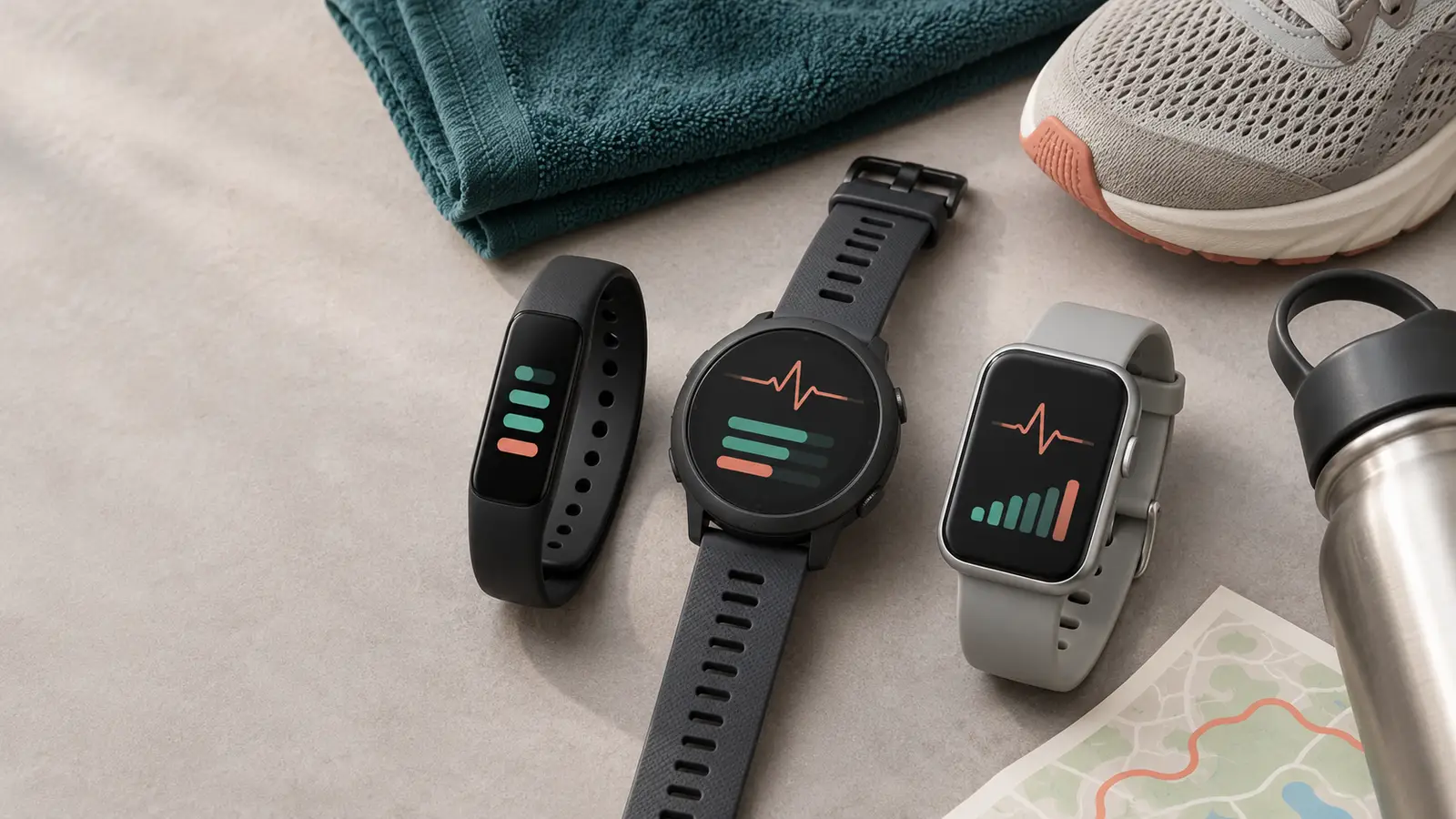
MedHelperPro did not possess, wear, charge-cycle, swim with, or record workouts on these devices. The hero is an original AI-generated generic editorial scene, not product photography. Independent reviews reflect particular wrists, units, firmware, routes, and activities. Results may change with fit, skin contact, tattoos, temperature, motion, firmware, and signal conditions.
The 2024 umbrella review found mean heart-rate bias around 3 percent across pooled evidence, yet it also found major differences in devices and methods. Fitness trackers were much less reliable for energy expenditure, activity intensity, and some VO₂ max estimates. FDA's January 2026 guidance also separates low-risk general wellness functions from software intended to diagnose, treat, cure, mitigate, or prevent disease. Use a tracker to organize activity, not to replace qualified medical evaluation.
Frequently asked questions
Which fitness tracker is most accurate?
No single tracker is most accurate for every metric and activity. Apple Watch Series 12 has strong current evidence for wrist heart rate. COROS PACE 4 has strong independent GPS observations. A secure fit and a compatible chest strap can matter more than brand when exercise heart-rate precision is the priority.
Is Fitbit Charge 6 good for running?
It is reasonable for casual runs when you carry a phone and allow dynamic or connected GPS. Its wrist heart rate performed well in some independent steady-run comparisons, but built-in route tracking was inconsistent. Frequent runners should favor PACE 4 or a running-focused Garmin.
Do I need dual-frequency GPS?
Usually not for open roads, parks, and casual walks. It becomes more useful around tall buildings, steep rock, dense tree cover, or when precise lap pace matters. It also draws more battery. Choose the mode based on route difficulty, not as a permanent default.
Can a fitness tracker improve fitness by itself?
No. It can make activity and workout patterns easier to see, but it cannot create a sustainable routine. Start with a few metrics tied to a real decision. The strength training evidence guide can help frame a practical program without turning the tracker into the goal.
Sources
- Apple: Series 12 sensors, workouts, battery, GPS, durability, and compatibility
- Apple Store: Series 12 starting price
- Apple: US standard and 2026 holiday return policy
- Apple: US limited warranty
- Apple: 2026 heart-rate accuracy study and Polar H10 reference method
- Garmin: vívoactive 6 product page
- Garmin manual: vívoactive 6 battery mode estimates
- Garmin: consumer limited warranty
- Garmin: US direct return process
- COROS: PACE 4 features, app connections, and battery
- COROS: PACE 4 dimensions, weight, GPS modes, and battery specifications
- COROS: two-year watch warranty and 30-day direct refund terms
- Google: Fitbit Charge 6 battery, sensors, water rating, sizes, and phone requirements
- Google Store: standard return policy
- Google: Fitbit limited warranty
- Wareable: independent Series 12 exercise and ownership review
- Wareable: independent vívoactive 6 heart-rate and GPS comparisons
- Tom's Guide: independent PACE 4 heart-rate, GPS, and battery observations
- Wareable: independent Charge 6 exercise heart-rate and GPS observations
- Sports Medicine: umbrella review of consumer wearable measurement accuracy
- British Journal of Sports Medicine: INTERLIVE wearable heart-rate validation recommendations
- FDA: January 2026 general wellness policy for low-risk products
Before you buy
- Confirm phone, operating-system, and app compatibility.
- Match GPS mode and heart-rate needs to your actual workouts.
- Check which insights, music services, or coaching tools require payment.
- Save the seller's return deadline and the manufacturer's warranty.
- Use the return window to log fit, route behavior, and real battery drain.