How to Build a Better Sleep Routine That Sticks
Affiliate disclosure: As an Amazon Associate I earn from qualifying purchases. MedHelperPro may earn a commission from eligible purchases made through links in this guide, at no extra cost to you. Affiliate availability does not affect our selections. Read the full disclosure.
Research note: Product selections are based on published specifications, policies, and independent evidence unless a guide explicitly describes hands-on testing.
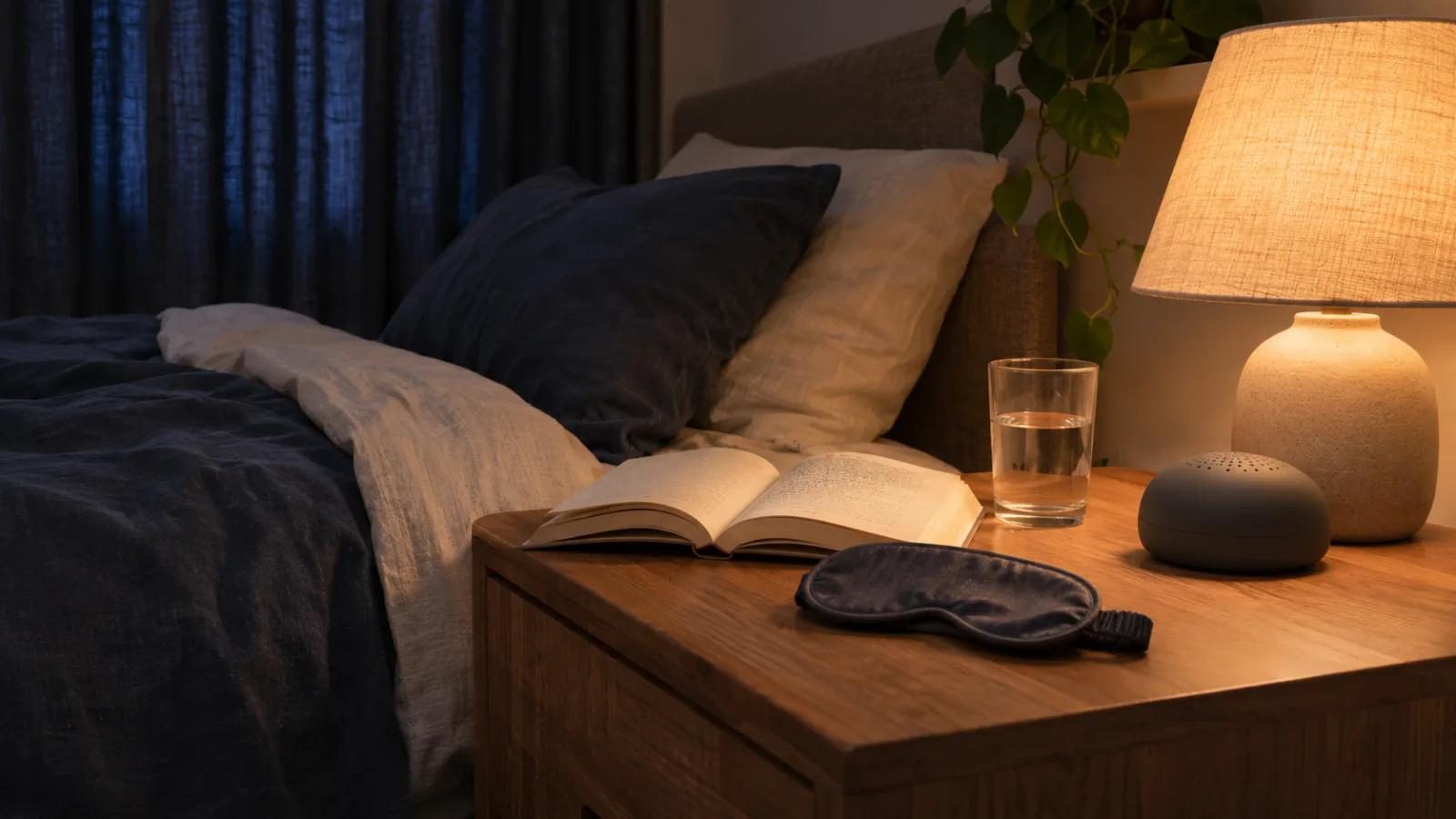
Optional room tool, not a treatment: The grey Dreamegg D1+ Sound Machine Alarm Clock, model W27, matches ASIN B0D78ZDSZX. Its exact title, variant, model, and ASIN were checked on November 17, 2026. Amazon price, seller, stock, and rating are not asserted here.
The short answer: A better sleep routine has one steady wake-time anchor, a short sequence you can repeat on busy nights, and a bedroom that is ready before you get tired. Start with three actions and one room fix. Do not buy several sleep products or redesign your whole evening at once.
This guide focuses on the repeatable wind-down and room setup. If your main problem is a bedtime and wake time that have shifted later, use our seven-day sleep schedule reset. That page deals with timing. This one deals with making the last part of the day easy to repeat.
Quick decision summary
- Start free: choose a realistic wake time, reserve 30 to 60 quiet minutes before bed, and repeat the same three actions.
- Fix the room before buying gadgets: address the specific light, noise, or temperature problem you can name.
- Use products as controls, not cures: curtains manage window light, sound machines mask irregular noise, and sunrise alarms change the morning cue.
- Run a seven-night check: record when the routine started, what interrupted it, and whether the chosen tool reduced friction.
- Know the limit: routine advice is not a stand-alone treatment for chronic insomnia or another sleep disorder.
How this guide was built
This is a researched guide, not a personal sleep experiment. We reviewed current CDC, NHLBI, and NIOSH guidance, the American Academy of Sleep Medicine clinical guideline on chronic insomnia, and current Dreamegg product and policy pages on November 17, 2026. We also checked the fit and ownership questions surfaced across MedHelperPro's sleep-product guides.
The framework prioritizes repeatability, a clear purpose for each step, low setup burden, and an honest exit rule. It does not prescribe sleep restriction, supplements, medication, or light therapy. The AASM clinical guideline specifically advises clinicians not to use sleep hygiene as the only treatment for chronic insomnia in adults.
| Routine layer | Free starting point | Optional tool | Main tradeoff |
|---|---|---|---|
| Timing | Steady wake time and enough time reserved for sleep | Basic alarm or sunrise alarm | An alarm can enforce timing but cannot replace enough sleep |
| Transition | Three familiar actions in the same order | Paper checklist or simple timer | A complex app can add another screen and more setup |
| Light | Dim lamps and cover small indicators | Blackout curtains or sleep mask | Fit, heat, washing, and safe nighttime movement matter |
| Noise | Close doors and silence nonessential alerts | Earplugs, fan, or sound machine | Important alarms and household signals must remain audible |
| Temperature | Adjust thermostat, fan, layers, and bedding | Breathable sheets or targeted cooling product | Comfort is personal and product claims are not standardized |
Step 1: Choose the wake time before the bedtime
Choose the morning anchor first because it tells you how much evening time is available. The CDC recommends going to bed and getting up at the same time each day. A bedtime that looks ideal on paper is not useful if it leaves too little time for sleep or cannot survive your normal week.
- Pick a wake time that works on most workdays and days off.
- Work backward to protect enough time for sleep, without treating one exact bedtime as a test.
- Set a routine-start time 30 to 60 minutes before the intended sleep window.
If work, caregiving, or school makes one daily schedule impossible, use two planned versions rather than improvising every night. Shift workers need a different light and sleep plan, so general evening advice may not fit their hours.
Step 2: Build a three-action wind-down
A routine works better when it survives a tired evening. Choose three actions that already belong in your life, then put them in a fixed order. NHLBI suggests using the hour before bed for quiet time, while CDC guidance says to turn off electronic devices at least 30 minutes before bedtime.
A workable sequence might be: close the kitchen, wash up and brush your teeth, then read a few pages under a dim lamp. Another might be: prepare tomorrow's clothes, shower, then listen to a familiar audio track. The exact actions matter less than their order and repeatability.
Who should skip a long routine: parents, caregivers, shift workers, and anyone whose evenings change without warning. Use a five-minute minimum version on difficult nights. The routine should bend without disappearing.
Step 3: Move stimulating tasks out of the final hour
The easiest wind-down is one that does not compete with unfinished work, a late meal, or a phone full of alerts. Move those tasks earlier where you can. NHLBI advises avoiding bright artificial light and intense exercise during the quiet hour, and it notes that caffeine can interfere with sleep for hours.
- Set a practical cutoff for work messages and news.
- Finish large meals earlier instead of making digestion part of bedtime.
- Move caffeine earlier if it overlaps with the evening. Our caffeine timing guide explains how to test a personal cutoff without pretending one time fits everyone.
- Prepare morning essentials before the wind-down begins so bedtime does not become planning time.
Do not add alcohol, supplements, or sedating products as a self-directed routine tool. This guide does not establish that they are suitable, safe, or effective for you.
Step 4: Make the room dark, quiet, cool, and usable
The room should solve a specific obstacle, not perform a wellness aesthetic. NHLBI guidance recommends a quiet, cool, dark bedroom. NIOSH also stresses comfort and keeping a clear, practical sleep space.
Start with a five-minute check after your eyes adjust to the dark. Look for window-edge light, charging indicators, clock displays, hallway spill, and lights that switch on when power or Wi-Fi changes. Our blackout curtain guide explains why panel overlap and edge coverage matter more than a printed blackout percentage.
Then listen. Silence nonessential alerts and decide which signals still must reach you. If irregular noise is the problem, compare bedside sound machines by display and control behavior or sleep earplugs by material and fit. Neither choice should block a smoke alarm, carbon monoxide alarm, child, door, or another safety signal you rely on.
Step 5: Give the phone a defined place
A vague promise to use the phone less is hard to follow. Decide where it charges, which calls may break through, and what replaces the task you normally do on it. CDC's public guidance recommends turning off electronic devices at least 30 minutes before bedtime.
If the phone is the alarm, place it far enough away that it is not the default reading device but close enough for required calls. Use scheduled Do Not Disturb settings with chosen emergency contacts. A paper book, downloaded audio, or a small notepad removes the excuse to keep scrolling for a substitute activity.
Who should skip a phone-free rule: anyone who needs the device for caregiving, safety, accessibility, or work. Reduce optional use instead of creating a rule that ignores a real responsibility.
Step 6: Make the morning close the loop
The routine ends when the next day starts. Open curtains or use normal morning light, stop the sound machine, and put the room back into daytime mode. A clear contrast between day and night supports the schedule better than adding more evening steps.
If dark mornings make wake-up timing harder, our sunrise alarm comparison separates documented light ramps, controls, app needs, and ownership terms. Treat a wake light as an alarm feature, not a medical light-therapy device. A basic alarm across the room is the lower-cost option.
Step 7: Audit the routine for seven nights
Change one variable at a time so you can tell what reduced friction. The CDC notes that a sleep diary can include bedtime, nighttime waking, morning wake time, naps, exercise, alcohol, caffeine, and medicines. You do not need a wearable to collect useful observations.
Record these five things
- When the wind-down started and which step was skipped.
- Which interruption happened: work, phone, light, noise, temperature, or another demand.
- Whether the room tool was used and whether it added setup.
- When you got into bed and when you got up.
- Whether daytime sleepiness affected driving, work, or another safety-sensitive task.
At the end of the week, keep the two or three steps that were easiest to repeat. Remove anything that existed only because it sounded healthy. If the schedule itself keeps moving, use the separate sleep-schedule plan rather than adding another bedroom product.
Which optional tool fits the problem and budget?
Buy only after you can name the obstacle. A free room change is the best first choice when it works. A product earns its place when it makes the routine simpler, controls a documented room problem, and remains easy to use when you are tired.
For window or street light
Low budget: cover small indicators and try a well-fitting sleep mask. Higher budget: use curtains with enough width and length to cover the window edges. Skip a mask if pressure or fit is distracting. Skip curtains if the rental rules, heater placement, or safe exit path make installation unsuitable.
For irregular household or street noise
Low budget: close doors, silence alerts, or use soft earplugs that fit correctly. Mid budget: a fan or simple sound machine can make variable noise less noticeable. The Dreamegg D1+ is one optional example: its manufacturer page documents 29 sounds, physical controls, corded USB-C power, and clock and night-light brightness from 0 to 100 percent.
Skip a sound machine if steady sound bothers you, a partner prefers silence, or you cannot keep required alarms audible. Dreamegg lists a one-year warranty. Its current 60-day quality guarantee applies to verified defects and functional problems, not simple change of mind, so read the seller's exact return terms before buying.
For a hard-to-repeat wake time
Low budget: use an existing alarm and place it where you must sit up to turn it off. Higher budget: consider a sunrise alarm when a gradual light ramp is the specific feature you want. Skip connected models if account setup, Wi-Fi, subscriptions, or app maintenance will make the routine harder.
For sleeping too warm
Start free: adjust room temperature, fan direction, layers, and bedding before replacing the mattress. If bedding traps heat, compare our cooling sheet guide by fabric, weave, care, and pocket depth. Skip a product that solves "cooling" through an unsupported label rather than a material or airflow difference you can inspect.
Compatibility and ownership checks
- Partner and household fit: agree on light, sound, alarm volume, and temperature before buying a shared-room device.
- Power behavior: confirm whether an alarm, sound, or saved setting still works after an outage. A backup clock battery may not run the full device.
- Light behavior: check playback, timer, charging, alarm-armed, lost-network, and power-restored states. A display that dims to zero may still have another indicator.
- App and subscription terms: separate included controls from paid libraries. Confirm whether the device works at night after setup without a phone or network.
- Cleaning and storage: check whether masks, earplugs, curtains, and bedding can be cleaned often enough for your routine.
- Return conditions: keep packaging until you have checked fit, light, noise, controls, and partner acceptance in the actual room.
What this routine cannot do
A routine can make ordinary evenings more consistent and remove avoidable room friction. It cannot diagnose or treat chronic insomnia, sleep apnea, circadian rhythm disorders, or another condition. The AASM guideline recommends multicomponent cognitive behavioral therapy for insomnia for chronic insomnia in adults and advises against sleep hygiene as the only treatment.
We did not test a seven-night routine, measure sleep, inspect products, or track outcomes. We also did not evaluate light therapy, supplements, medicines, or sleep-restriction protocols. If sleep trouble persists or daytime sleepiness affects safety, talk with a qualified clinician rather than making the routine stricter.
Frequently asked questions
How long should a wind-down routine be?
Start with 30 to 60 minutes because that is easier to protect than a long ritual. NHLBI recommends using the hour before bed for quiet time, while NIOSH describes a 90-minute preparation window. The better length is the one you can repeat without cutting into sleep time.
Do I need to follow the exact same routine every night?
No. Keep the order and the purpose, then use a short version when the evening changes. A five-minute minimum routine is more useful than abandoning a complicated plan.
Can a sound machine become part of the routine?
Yes, when it solves irregular noise and remains simple to start. Use the lowest useful volume, keep important alarms audible, and confirm every display and status light can be dark enough. Continuous-noise evidence is mixed, so do not treat the device as a sleep treatment.
Should I track sleep with a watch or ring?
You do not need a wearable to test whether the routine is repeatable. A short paper log can record start time, interruptions, and morning wake time without adding charging or nightly data. If you do use a device, focus on longer trends rather than one night's stage estimates.
What if the routine does not help?
Check whether the problem is timing, the room, or persistent sleep trouble. Use the schedule-reset guide for a shifted timetable and remove tools that add friction. Seek qualified care when the problem continues or affects daytime safety.
Sources
- CDC: consistent timing, bedroom setup, electronics, caffeine, and sleep diaries
- NHLBI: quiet time, schedule consistency, caffeine, meals, activity, and bedroom environment
- NIOSH: wind-down timing, daytime light, room setup, and work-safety context
- American Academy of Sleep Medicine: behavioral and psychological treatments for chronic insomnia in adults
- Dreamegg: D1+ controls, sound library, power, dimensions, and warranty
- Dreamegg: current quality guarantee and return limits
Before you add a sleep product
- Name the exact light, noise, temperature, timing, or setup problem.
- Try the free room or routine change first.
- Check partner fit, safety-alarm audibility, power, apps, and subscriptions.
- Read direct-purchase and marketplace return terms separately.
- Keep only products that reduce steps or control a documented obstacle.