Best Desk Plants for Air Quality: 5 Honest Picks (2026)
Affiliate disclosure: As an Amazon Associate I earn from qualifying purchases. MedHelperPro may earn a commission from eligible purchases made through links in this guide, at no extra cost to you. Affiliate availability does not affect our selections. Read the full disclosure.
Research note: Product selections are based on published specifications, policies, and independent evidence unless a guide explicitly describes hands-on testing.
Choose a desk plant for the desk, not as an air purifier.
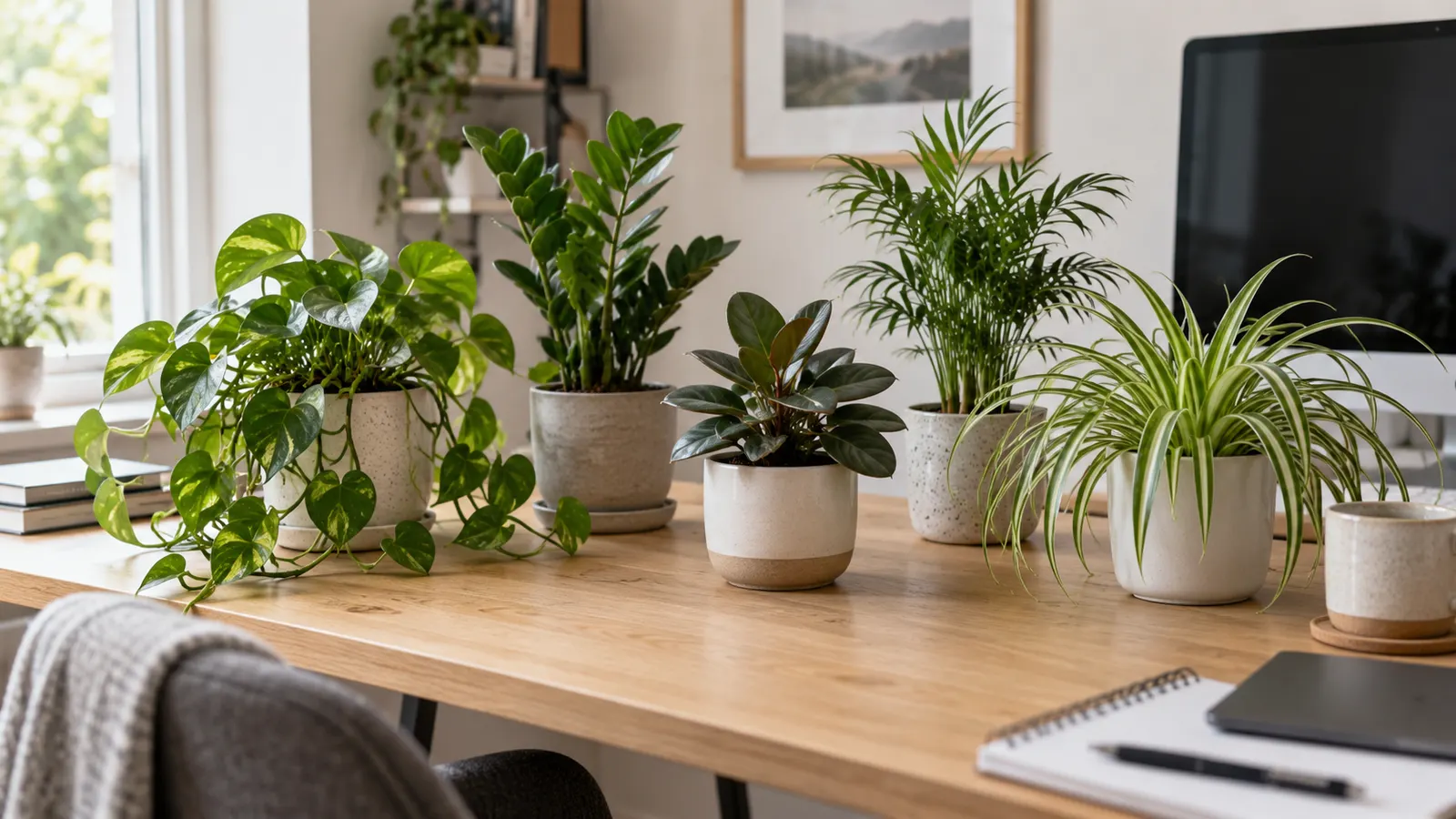
A baby rubber plant is the best all-around desk pick because it stays fairly compact, tolerates imperfect indoor light, and is listed by the ASPCA as non-toxic to cats and dogs. Pick a ZZ plant for the darkest office, pothos for a trailing budget option, a parlor palm for pet-safe low light, or a spider plant for a shelf or large desk.
PLANT
No practical number of plants on a desk will clean a room the way an air cleaner, source control, or ventilation can. A 2020 review converted 196 chamber-test results into clean-air delivery rates and estimated that a typical building would need roughly 10 to 1,000 plants per square meter of floor area to match ordinary air exchange. That is the useful answer to the "air-purifying plant" claim.
Plants can still make a workspace feel less bare. The trick is matching the plant to the light, free surface area, pets, and the person who will water it. If the desk itself is already tight, start with the small-space desk guide before giving six inches of usable depth to a pot.
Which desk plants are the best choices?
| Plant | Best for | Light fit | Care burden | Pet note |
|---|---|---|---|---|
| Baby rubber plant Peperomia obtusifoliaCheck price on Amazon | Best overall compact desk plant | Bright indirect; tolerates low light for a time | Low, but dislikes soggy soil | ASPCA lists it as non-toxic to cats and dogs |
| ZZ plant Zamioculcas zamiifoliaCheck price on Amazon | Dark offices and forgetful waterers | Very low to bright indirect | Very low if allowed to dry | Toxic if chewed |
| Golden pothos Epipremnum aureumCheck price on Amazon | Budget-friendly trailing growth | Bright indirect; survives low light | Low, with occasional pruning | Toxic if chewed |
| Parlor palm Chamaedorea elegansCheck price on Amazon | Pet-safe greenery in a dim corner | Bright indirect; tolerates low light | Low to medium | ASPCA includes it among pet-friendly plants |
| Spider plant Chlorophytum comosumCheck price on Amazon | Shelves, credenzas, and wide desks | Medium light; tolerates shade | Medium due to width and tip care | ASPCA includes it among pet-friendly plants |
Size note: These plants keep growing. A four-inch nursery pot is a starting size, not a permanent footprint. ZZ plants can reach 2 to 4 feet, pothos vines can run far beyond a desk, parlor palms spread as they mature, and spider plants send out arching leaves and plantlets. Pruning, division, or relocation is part of ownership.
Do desk plants really improve indoor air quality?
Not at a useful room scale. NASA's 1989 technical memorandum found that plants removed benzene, trichloroethylene, and formaldehyde in controlled chamber work. The problem is the chamber. A sealed test space does not behave like an office with doors, ventilation, people, furniture, and continuously changing pollutant sources.
The more relevant calculation comes from Cummings and Waring's peer-reviewed review. It analyzed 12 studies and 196 results. The median single-plant clean-air delivery rate was only 0.023 cubic meters per hour. The authors estimated that 10 to 1,000 plants per square meter would be needed to equal the VOC removal already provided by typical building air exchange.
If the goal is cleaner air, follow the order in the EPA's current guidance: reduce or remove pollutant sources, ventilate with clean outdoor air when appropriate, then use suitable filtration as a supplement. A plant can sit beside that plan. It should not replace it.
How were these desk plants selected?
The shortlist rewards plants that fit ordinary office conditions, not plants that scored well in an old sealed-chamber table. Care guidance came primarily from North Carolina State Extension and the Royal Horticultural Society. Pet notes were checked against the ASPCA. Current online listings and live-plant purchase terms were checked October 1, 2026.
- Desk footprint: A good pick starts small enough to leave room for the keyboard, mouse, notebook, and monitor stand.
- Honest light tolerance: "Low light" means a plant can persist there, not that it grows best in darkness.
- Watering margin: Office plants are easy to overwater because decorative pots often hide standing water.
- Pet and child safety: A trailing vine within reach creates a different risk from a pot on a closed office shelf.
- Growth habit: Vertical, trailing, and arching plants use desk space differently even when their nursery pots match.
- Buying risk: Live plants vary naturally. Shipping damage, pests, drainage, and return rules matter more than a perfect product photo.
These are species recommendations rather than a ranking of plant retailers. That keeps the advice useful across local nurseries and regions. A premium shipped plant with a decorative pot is not automatically healthier than a small nursery plant you can inspect before buying.
Why is baby rubber plant the best overall desk pick?
Baby rubber plant is the most balanced choice for a normal desk. NC State Extension describes it as a desktop plant that prefers bright indirect light, tolerates low light for several months, and reaches roughly 6 inches to 2 feet. The non-variegated green form is the safer choice when light is limited.
Its thick leaves store some water, but that does not make the pot immune to neglect. Wet soil is a bigger risk than missing one rigid calendar date. Use a pot with drainage, let excess water leave the pot, and check the soil rather than adding a small splash every day. Overwatering can yellow the leaves and lead to root rot.
The ASPCA lists Peperomia obtusifolia as non-toxic to dogs and cats. That does not mean pets should chew it, but it is a better household fit than pothos or ZZ. Pass on it if the desk has no useful ambient light, cold drafts hit the pot, or you want a tall statement plant.
When is a ZZ plant the better choice?
ZZ plant is the best pick for a dim office and an owner who forgets to water. NC State Extension says it can grow under very low light, including fluorescent light, although it performs best in bright indirect sun. Its rhizomes and glossy leaves store water, so constantly wet soil is the main avoidable mistake.
A small ZZ looks tidy beside a monitor because its stems grow upright. It will not stay small forever. The species can reach 2 to 4 feet in height and width, which eventually turns a desk plant into a floor or side-table plant. Buy the smallest healthy pot if surface area matters.
The compromise is safety. NC State lists medium toxicity to cats and dogs and identifies calcium oxalate as the toxic principle. It fits a closed office, low-traffic shelf, or desk without curious pets and young children. Choose something else if leaves will be within chewing reach or several coworkers are likely to water the same pot.
Is pothos the best budget desk plant?
Golden pothos is the easiest low-cost route to a fuller-looking desk because small plants and rooted cuttings are widely sold and easy to propagate. NC State Extension says it prefers bright indirect light but survives long periods in low light. Low light can reduce variegation, so green forms usually make more sense far from a window.
The vine is both the appeal and the maintenance burden. Trail it from a shelf, guide it along a support, or prune it before it crosses cables and controls. Stems can become sparse near the pot over time, but pruning helps maintain a bushier shape. The plant roots easily in water, which makes an inexpensive cutting a reasonable starter option.
Pothos contains insoluble calcium oxalates and is toxic to cats and dogs if chewed. Buy it for inexpensive trailing foliage if occasional pruning sounds manageable. Do not put it within a pet's reach, on an unprotected desk edge, or where loose stems would interfere with the desk's cable-management route.
Which pet-safe low-light plant works on a larger desk?
Parlor palm is the stronger pet-safe choice when the desk or nearby credenza has room for spreading fronds. NC State Extension says it tolerates low light and ordinary interior conditions, while bright indirect light is still preferable. The ASPCA includes parlor palm on its pet-friendly plant list.
Young plants may start around a foot tall, but the species is slow rather than permanently miniature. Retailers often combine several stems in one pot for a fuller look. Some stems may lose the competition and die as the planting ages. Browning tips can come from dry conditions or water quality, and mealybugs or spider mites can hide among the leaflets.
Parlor palm suits a pet-owning user with a side desk, credenza, or empty corner that receives indirect light. It is a poor match when fronds would brush the screen, the office has harsh cold drafts, or the plant must survive long absences with completely dry soil.
When does a spider plant make more sense?
Spider plant is a forgiving pet-friendly option for a shelf or wide desk, not a cramped keyboard area. NC State Extension says it prefers medium light but tolerates deep shade. It also tolerates some drought, though growth is better with moist, well-drained soil.
The plant's arching leaves can reach 12 to 18 inches, and mature plants produce long stems with plantlets. That is attractive from a shelf and annoying beside a mouse. The leaf tips can brown in response to water salts, dry air, or inconsistent care. Its low purchase cost does not change the space it eventually uses.
This is the pick for a wide desk, hanging planter, bookcase, or owner who enjoys propagating plantlets. A six-inch footprint will not contain it for long. Avoid spider plant where trailing stems would be snagged or the only available spot receives hot direct sun.
What should you check before buying a desk plant?
Start with the room, not the plant label. A bright product photo cannot tell you whether a desk is six feet from a north window, under strong office lighting, or inside a room with the blinds closed all week. The best buying check takes five minutes and avoids months of slow decline.
- Measure the full working area. Mark the pot diameter plus the expected leaf spread. Keep plants away from laptop vents, outlets, and the main mouse path.
- Observe the light for a workday. Note direct sun, indirect daylight, and how often the room lights are actually on. A task lamp selected for reading is not automatically a plant grow light.
- Inspect before buying. Check leaf undersides, stem joints, and the soil surface for scale, webbing, mealybugs, fungus gnats, or rot. Isolate a new plant from other plants for a short observation period.
- Choose drainage over a decorative promise. A nursery pot inside a cachepot is easier to drain than a sealed ceramic pot. Empty collected water after watering.
- Confirm the exact botanical name. Common names can cover different plants. Pet safety and care guidance depend on the species, not the marketing label.
- Read the live-plant policy. Shipped plants may arrive stressed. The Sill, for example, offered a 30-day replacement guarantee when checked October 1, but required photos and otherwise treated live plants as non-returnable.
Budget buyers should start with a healthy small nursery pot and reuse a saucer or cachepot they already own. Premium delivered plants mostly buy convenience, packaging, and a coordinated planter. Current Sill listings started around $69 for pothos, baby rubber plant, and parlor palm, and $79 for ZZ. Those prices can change and should not be treated as the value of the plant species.
Frequently asked questions
How many plants does it take to clean office air?
Far more than a practical desk can hold. The Cummings and Waring review estimated roughly 10 to 1,000 plants per square meter of floor area to match typical building air exchange for VOC removal. Use source control, suitable ventilation, and filtration for air quality. Treat the plant as décor.
Can a plant grow in an office with no window?
Some plants tolerate low light, but no live plant grows indefinitely without usable light. ZZ plants cope better than most with dim conditions. If the office has no daylight, measure whether the installed lighting supports plant growth or use a timer-controlled grow light. A faux plant is the honest zero-light option.
What is the safest desk plant around cats and dogs?
Baby rubber plant, parlor palm, and spider plant appear on ASPCA non-toxic or pet-friendly references. Individual animals can still upset their stomachs by chewing plant material, and potting mix may create its own mess or exposure. Keep every plant out of habitual chewing reach.
Should a desk plant sit beside a computer?
Only if the pot cannot spill into vents, power strips, keyboards, or cables. Use a stable saucer, leave room for the plant's mature width, and move the pot to water it. If it crowds screen placement or input devices, relocate it before compromising the workspace setup.
Research and testing limitations
MedHelperPro did not possess, grow, water, repot, ship, measure, or monitor these plants. This guide does not verify survival in a particular office, pest resistance, growth rate, mature desk footprint, shipping condition, or retailer stock. Plant appearance and size vary naturally. Light, temperature, humidity, potting mix, watering, water quality, and local growing conditions can change the result.
The calendar called for a skeptical reading of the old NASA clean-air claim, not a fabricated room test. The repository contains no plant samples, sealed chamber, calibrated VOC monitor, controlled pollutant source, airflow record, or repeated measurements. The guide therefore relies on the original NASA report, a peer-reviewed room-scale analysis, and EPA guidance. It makes no claim that MedHelperPro measured cleaner air.
The original hero is an AI-generated generic desk scene. It is not a photograph of MedHelperPro's office or plants, and it does not depict a controlled air-quality test.
Sources and further reading
- NASA Technical Reports Server: 1989 interior landscape plant study
- Cummings and Waring: potted plants and indoor VOC removal rates
- US EPA: Air Cleaners and Air Filters in the Home
- NC State Extension: baby rubber plant, ZZ plant, pothos, parlor palm, and spider plant
- ASPCA: baby rubber plant pet-safety listing and pet-friendly spider plant and parlor palm guidance
- Royal Horticultural Society: choosing and caring for office plants
- The Sill: current live-plant listings, 30-day guarantee, and refund policy
Before you buy: Recheck the botanical name, mature size, light needs, pet safety, drainage, plant condition, delivery weather, current price, stock, guarantee, photo deadline, and return rules. This guide is plant research, not a live-plant or indoor-air test.